How to Survive a Ransomware Attack Safely
November 18, 2026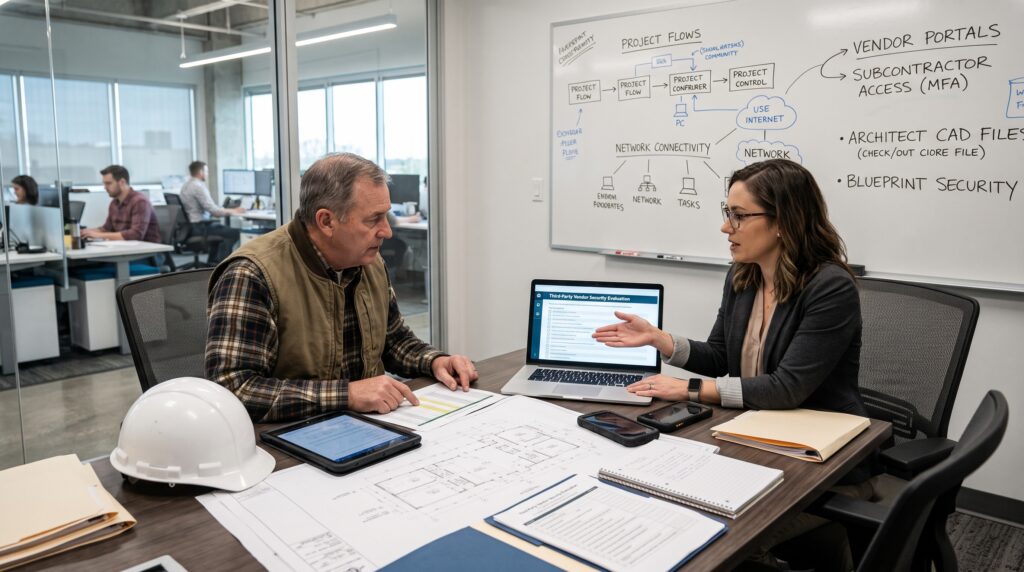
Third-Party Vendor Risk has become one of the most overlooked cybersecurity vulnerabilities for commercial builders, general contractors, and subcontractors across Greater Houston. In the modern construction industry, executing a project requires sharing massive amounts of proprietary data—ranging from highly sensitive architectural blueprints and engineering CAD files to financial submittals—across a sprawling network of external partners.
While you may have invested heavily in securing your own in-house servers, email, and estimating software, your digital perimeter only extends as far as the weakest link in your supply chain. When you grant network access, project portal credentials, or proprietary files to outside parties, their cybersecurity vulnerabilities instantly become yours. Implementing a strategy to manage third-party vendor risk is no longer just an IT best practice; it is a fundamental operational necessity to prevent data breaches, espionage, and costly litigation.
The Cost of the “Open Door” Cyber Threat
For Houston construction companies, the immediate danger isn’t just that an outside collaborator might lose an email; it is that they are being used as backdoors into your own networks. Attackers frequently target smaller architectural firms, specialty equipment suppliers, and subcontractors because they are easier to compromise and offer a direct pathway to more lucrative targets.
When you share confidential data with vendors, you expose three primary areas to potential breaches:
-
Proprietary Blueprints and Schematics: Digital files detailing structural blueprints, electrical routing, HVAC schematics, and utility configurations are highly valuable. A breach at an engineering or architectural partner can result in this proprietary intellectual property being stolen, copied, or leaked, raising severe safety and competitive concerns.
-
Shared Project Portals: Platforms like Procore, Bluebeam, and shared BIM repositories are standard collaborative hubs. If a subcontractor uses weak passwords or lacks multi-factor authentication (MFA), an attacker can easily hijack their credentials, access your active project files, and modify plans or insert malicious links.
-
Financial and Transactional Data: Cybercriminals use compromised vendor accounts to track project schedules, identify invoice due dates, and send highly convincing “bank routing change” emails directly through legitimate, yet compromised, accounts.
Strategic Areas to Audit & Vet Your Partners
Effectively managing third-party vendor risk does not require creating a bureaucratic logjam that halts project momentum. Rather, it means introducing standardized vetting practices at critical handoff points in your vendor relationships.
1. Vetting Architectural and Engineering Firms
Architects and engineers are the gatekeepers of your project’s digital intellectual property. Before giving them access to your file-sharing systems or inviting them to collaborate, ask:
-
Do they use secure, encrypted platforms to transfer and store high-value schematics and blueprints?
-
Are they using phishing-resistant multi-factor authentication (MFA) on their own systems?
-
What is their protocol if a mobile device or workstation containing project files is lost or compromised?
2. Auditing Specialty Equipment & Material Vendors
The companies providing structural steel, specialized MEP (mechanical, electrical, plumbing) systems, or heavy machinery often have integrations with your procurement systems.
-
Identify what access these vendors have to your internal purchasing and ERP platforms.
-
Ensure their billing processes utilize dual-control verification to stop invoice fraud before it occurs.
3. Evaluating Subcontractors and Field Partners
Subcontractors frequently interact with project management systems via mobile devices, tablets, and temporary jobsite trailer networks, which often have weaker security than standard corporate offices.
-
Define clear, non-negotiable security requirements during the subcontractor onboarding and pre-qualification process.
-
Require that any remote team members accessing your project portals use dedicated, unique accounts rather than shared “info@” or “sub@” login credentials.
5 Practical Ways to Mitigate Your Exposure
To protect your proprietary assets while keeping your jobsites running on schedule, Houston businesses should implement five core technical and administrative controls:
-
Enforce the Principle of Least Privilege: Never grant universal system access to an outside collaborator. Set granular permission levels so that a subcontractor or equipment vendor only sees the specific files, folders, and portal areas required for their immediate scope of work.
-
Mandate Multi-Factor Authentication (MFA): Require that all external users logging into your project portals, BIM systems, or shared folders use MFA. If a third-party vendor’s password is stolen, MFA is often the only thing preventing an attacker from gaining unauthorized access to your projects.
-
Transition to Permission-Controlled Cloud Sharing: Move away from sending blueprint PDFs as attachments over open email or using unrestricted public download links. Rely instead on secure cloud directories where you can assign custom view-only, edit, or expiration settings to specific email addresses.
-
Implement Rigorous “Offboarding” Workflows: Project partners frequently retain access to proprietary systems and digital portals long after their work is finished. Establish a process to regularly audit, disable, and delete dormant user accounts and remote access connections once a project phase wraps up.
-
Codify Security Requirements in Contracts: Explicitly state your cybersecurity expectation and “off-band callback” policies for change orders or bank updates directly within subcontracts. If partners understand that safeguarding project data is a prerequisite for getting paid, they will take their security responsibilities much more seriously.
Key Takeaways for Houston Builders
-
Your perimeter is only as secure as your partners: You cannot secure your network without actively addressing the risks introduced by your collaborators.
-
Limit access to what is strictly necessary: Enforce strict visual, editing, and platform privileges for external users to prevent lateral data exploration.
-
Vetting must be ongoing: Ensure you review, audit, and revoke digital credentials systematically rather than treating onboarding as a one-time approval.
Frequently Asked Questions About Third-Party Vendor Risk
Are we legally liable if a subcontractor’s system is breached and our blueprints are stolen?
This depends entirely on the language in your client agreements, subcontracts, and regulatory frameworks. However, even if your network wasn’t the origin of the breach, your business can still face severe project delays, client lawsuits, reputational fallout, and potential breach-of-contract penalties for failing to adequately secure proprietary client data.
How do we audit vendors without slowing down our project timeline?
Vetting should be built directly into your standard pre-qualification and bidding procedures. Providing a straightforward security questionnaire during the onboarding process—before work begins—ensures you can review their digital defenses without creating workflow friction when a project is underway.
Why is email a major vulnerability when working with subcontractors?
Because email lacks natural containment, an compromised account can allow cybercriminals to intercepts message threads, analyze billing patterns, and access shared documents. Adopting permission-controlled file-sharing portals instead of emailing attachments helps contain your digital exposure.
Don’t Let an Outside Partner Compromise Your Digital Jobsite
You shouldn’t have to guess whether a remote login, a vendor connection, or an insecure subcontractor portal is leaving your commercial operations exposed to high-dollar cyber threats.
Schedule a comprehensive Cyber Security Evaluation & Assessment with Krypto IT today. Our Houston team will audit your project collaboration workflows, evaluate your digital handoffs, and help you establish practical safeguards to manage third-party vendor risk without slowing your operations down.