Managing OT Cyber Security in Energy Pipelines
November 19, 2026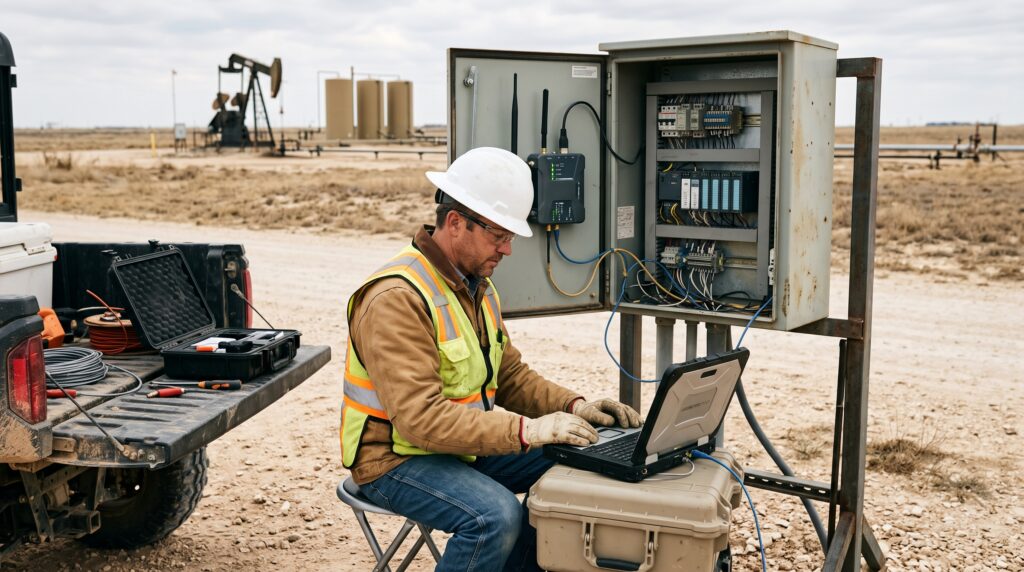
Miles away from corporate headquarters, unmanned pump jacks, compressor stations, and metering skids operate around the clock across Texas. Because sending a crew out for every minor valve adjustment or pressure check is too expensive, energy operators rely heavily on wireless telemetry to keep production moving. That convenience, however, creates a massive blind spot: remote wellhead security is often treated as an afterthought compared to corporate office defenses.
When critical valves, RTUs (Remote Terminal Units), and flow computers sit behind a locked chain-link fence in the middle of nowhere, physical locks alone will not stop a digital intrusion. Cybercriminals and rogue actors actively scan public cellular and satellite IP ranges looking for exposed industrial modems. Without proper encryption and strict identity verification, an unmonitored field cabinet can quickly turn into a direct doorway into your broader production network.
Why Unmanned Field Sites Attract Cyber Threats
For independent exploration and production (E&P) companies and midstream operators headquartered in Greater Houston, managing dozens or hundreds of dispersed locations introduces unique operational headaches that attackers love to exploit.
-
Exposed Cellular and Satellite Modems: Many legacy field gateways were configured years ago with static public IP addresses and default vendor passwords so technicians could reach them easily from a laptop. Automated bots find those open ports within minutes.
-
Weak Physical Tamper Resistance: Even when a field enclosure is locked, an opportunistic intruder who pries open an unlocked RTU panel or plugs a laptop into an exposed Ethernet port on a skid can hijack local controls if port security is turned off.
-
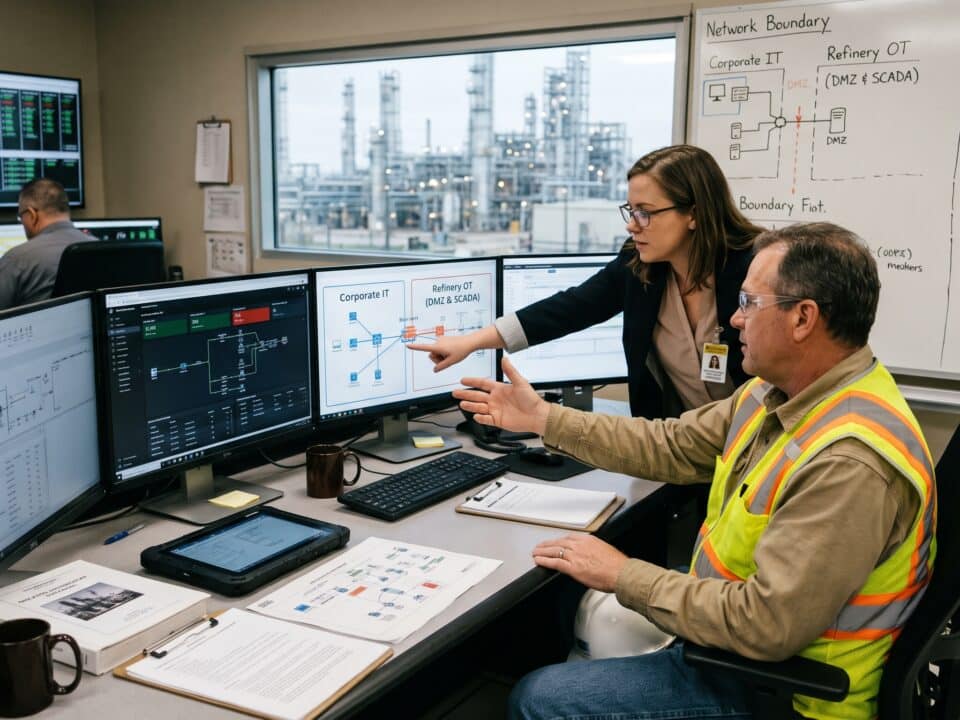
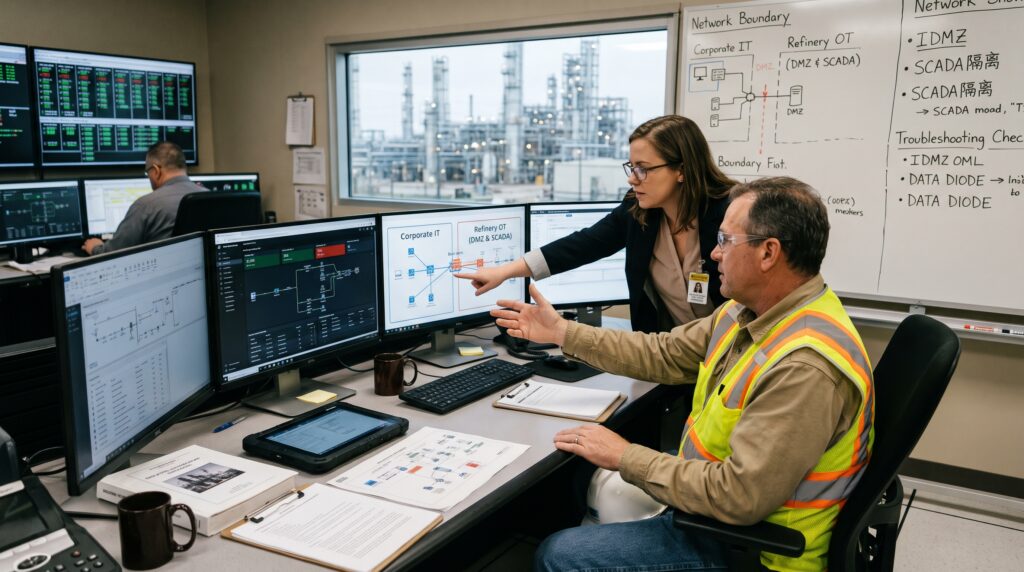
Flat Network Trust: In older telemetry setups, once a cellular modem authenticates onto the private APN (Access Point Name), it can often communicate freely with neighboring well pads or backhaul straight into central SCADA servers.
-
Infrequent Firmware Maintenance: Unlike office laptops that reboot and install patches every Tuesday, ruggedized field routers frequently run outdated firmware for years because nobody wants to risk bricking a remote device two hours down a caliche road.
Locking Down Wireless Backhaul: Cellular and Satellite Encryption
Every byte of pressure, temperature, and flow-rate data traveling between a remote pad and your central control room crosses third-party infrastructure. Treating a private cellular APN or commercial satellite link as automatically “secure” is a dangerous assumption—effective remote wellhead security requires encrypting the traffic yourself from end to end.
Build IPSec or WireGuard Tunnels at the Edge
Never transmit industrial protocols like Modbus TCP or DNP3 in plain text over wireless links. Deploy ruggedized industrial routers at every wellhead capable of establishing encrypted VPN tunnels (such as IPSec with AES-256 encryption) back to your core data center. Even if someone intercepts the radio or satellite signal, the payload remains unreadable.
Eliminate Static Public IP Addresses
If a field router has a publicly routable IP address, it is visible to the entire internet. Move all field modems behind private carrier APNs with outbound-only connectivity, meaning the remote device initiates the encrypted tunnel to headquarters rather than listening for incoming connections from unknown sources.
Secure Satellite Failover Paths
Many operators use LEO (Low Earth Orbit) or geostationary satellite terminals as primary or backup links where cellular coverage drops off. Make sure your firewall rules and encryption policies apply identically to the satellite interface—otherwise, a temporary cellular outage could force traffic over an unencrypted backup path.
Replacing Broad VPNs With Zero-Trust Network Access (ZTNA)
Historically, when a field engineer or third-party automation contractor needed to troubleshoot a PLC at a remote metering station, IT handed them a traditional VPN login. The problem? Once connected, that single credential often granted visibility across an entire subnet of field assets.
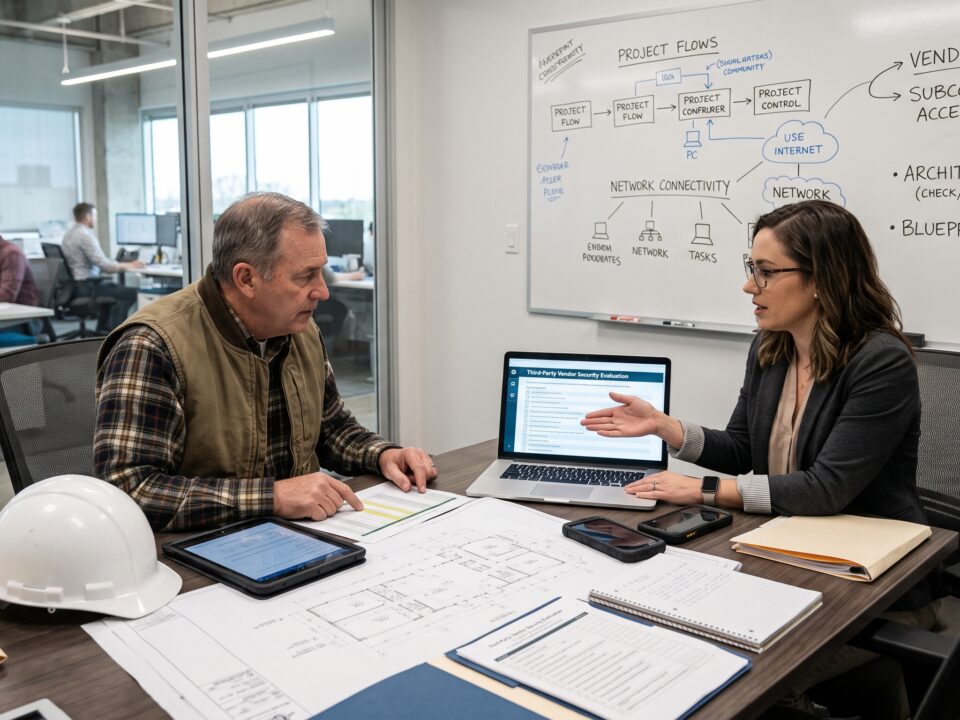
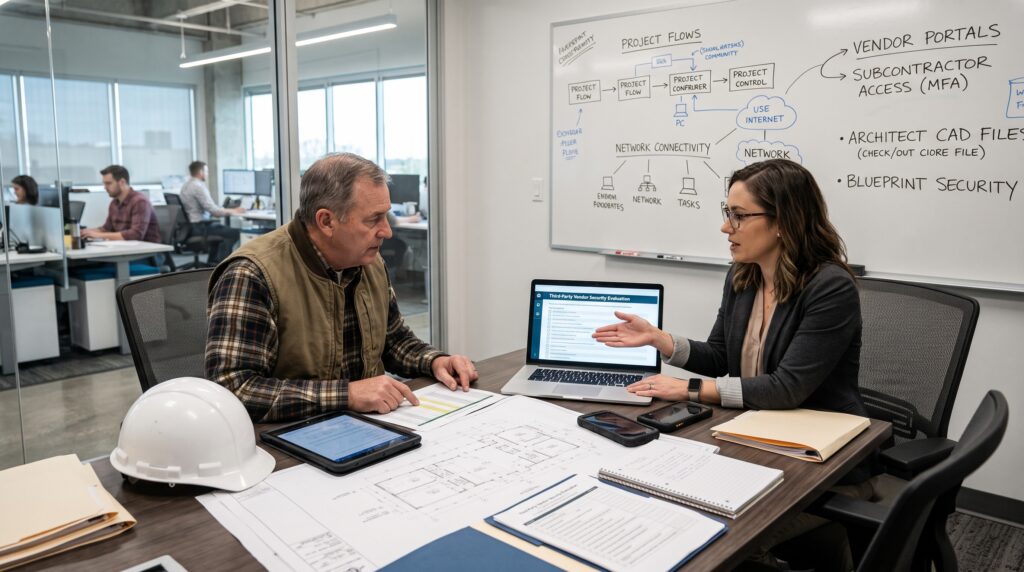
Modern remote wellhead security swaps broad network trust for Zero-Trust Network Access (ZTNA). Under a zero-trust model, no user, contractor, or device is trusted simply because they are on the right network segment.
-
Identity-First Verification: Every technician or vendor must authenticate using phishing-resistant Multi-Factor Authentication (MFA) before any session begins.
-
Application- and Device-Level Micro-Segmentation: Instead of opening access to an entire field subnet, ZTNA brokers a temporary, encrypted connection strictly to the single HMI or RTU interface that specific technician is authorized to service.
-
Time-Bound Contractor Sessions: Third-party integration specialists get automated, time-limited access windows—for instance, a four-hour maintenance window—after which their session automatically terminates without anyone needing to remember to revoke a password.
-
Full Session Auditing: Every command, file upload, and configuration change made during a remote maintenance session is logged and tied to a named individual.
Four Practical Steps Houston Operators Can Take This Quarter
Strengthening remote wellhead security doesn’t require ripping out every functioning RTU in the field overnight. Start with high-impact, low-disruption upgrades that close the easiest attack paths first:
-
Run a Public IP Sweep: Audit every cellular SIM and satellite terminal on your carrier bills to confirm none are assigned exposed public IP addresses or running default administrative credentials.
-
Disable Unused Physical Ports: Configure managed switches inside field cabinets to shut down open Ethernet ports and enforce MAC-address filtering so an unauthorized laptop plugged in on-site cannot pull an IP address.
-
Isolate Well Pads From One Another: Update routing rules so Well Pad A cannot talk directly to Well Pad B—all telemetry should route strictly north-south to your central collection servers.
-
Centralize Firmware and Certificate Management: Use cloud-based industrial router management platforms to push security patches and rotate encryption certificates across hundreds of sites simultaneously without rolling a truck.
Common Questions About Field Asset Cybersecurity
Can legacy RTUs and flow computers support modern encryption?
Even if an older flow computer or PLC lacks the processing power to encrypt data natively, you can place a modern, industrial-grade security gateway right next to it inside the NEMA enclosure. The gateway wraps legacy serial or Ethernet traffic inside an encrypted tunnel before it ever leaves the cabinet.
Does zero-trust access slow down emergency troubleshooting in the field?
No—when configured properly, ZTNA actually speeds up response times. Authorized engineers can connect securely from an approved tablet or laptop in seconds using single sign-on and MFA, without wrestling with legacy VPN clients or waiting on firewall rule changes.
How does remote wellhead security affect cyber insurance renewals?
Underwriters scrutinizing energy and midstream policies now specifically ask whether field telemetry is segmented from corporate IT, whether MFA protects remote vendor access, and how unmanned sites are monitored. Documenting these controls directly lowers renewal friction and coverage exclusions.
See Where Your Field Network Stands Before an Outage Strikes
Managing dispersed oil and gas infrastructure is challenging enough without wondering whether an unmonitored cellular gateway or shared vendor login is leaving your operations exposed.
Book a Cyber Security Evaluation & Assessment with Krypto IT. Our Houston cybersecurity specialists will review your remote access architecture, identify exposed field endpoints, and map out a practical plan to strengthen remote wellhead security across every site you operate.